Building Communication From an Early Stage
Teaching Kenyan Sign Language to young learners is about much more than introducing signs. It is about creating access, encouraging expression, and helping children engage more fully with the people and spaces around them.
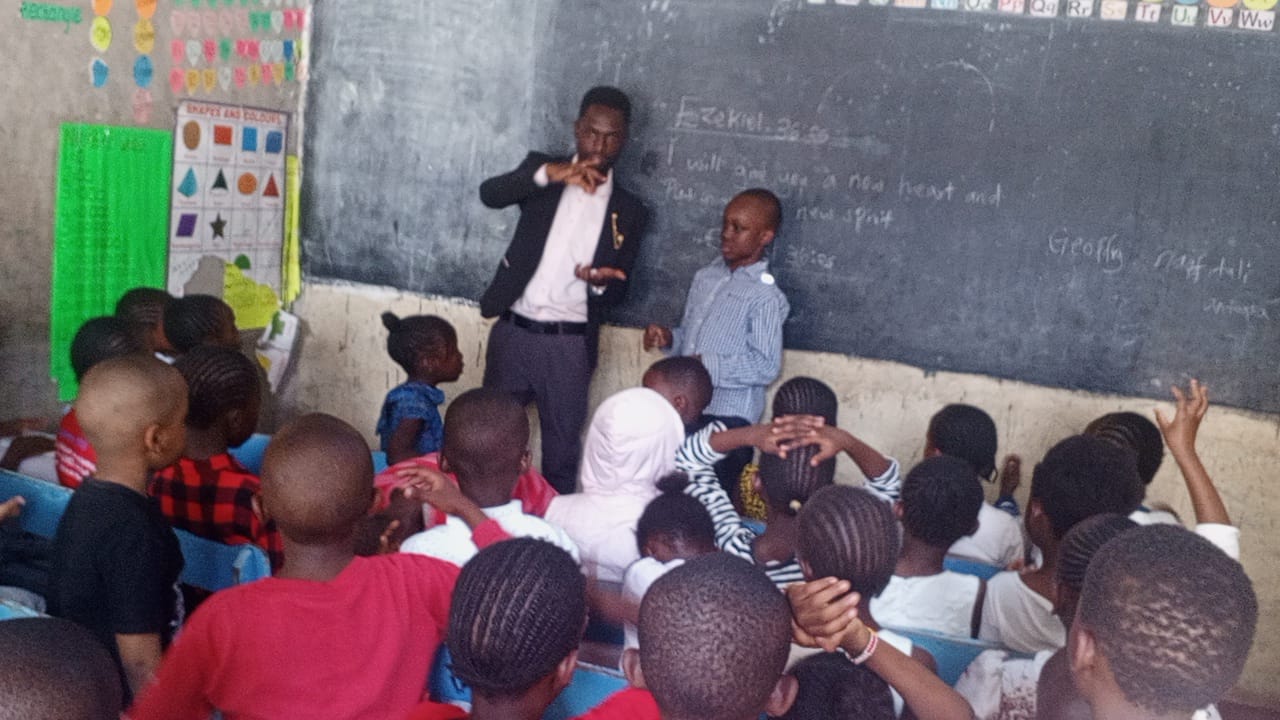
In this moment, Grade 1 and Grade 2 children were being introduced to communication tools that can strengthen confidence and participation early in life. That kind of support matters because the earlier children are equipped to communicate, the stronger their foundation for learning and inclusion becomes.
“Communication is part of dignity. When children are given tools to express themselves, they are better able to participate, connect, and grow.”
Why This Matters for Inclusion
Inclusive learning requires more than good intentions. It requires practical steps that help children access education meaningfully. Kenyan Sign Language is one of those practical steps. It opens doors to understanding, participation, and stronger connection in the classroom.
When children are supported in communication early, they are better positioned to build confidence in themselves and in their place within the learning environment.
Video From the Experience
This video helps bring the moment to life by showing learning, interaction, and the value of communication support in action.
What CAN Sees in Work Like This
CAN sees value in moments where children are supported in ways that are tangible and empowering. Teaching Kenyan Sign Language to young learners reflects the kind of work CAN believes in: practical, respectful, and centered on ability.
It is through work like this that inclusion becomes more than language. It becomes something children can actually experience.